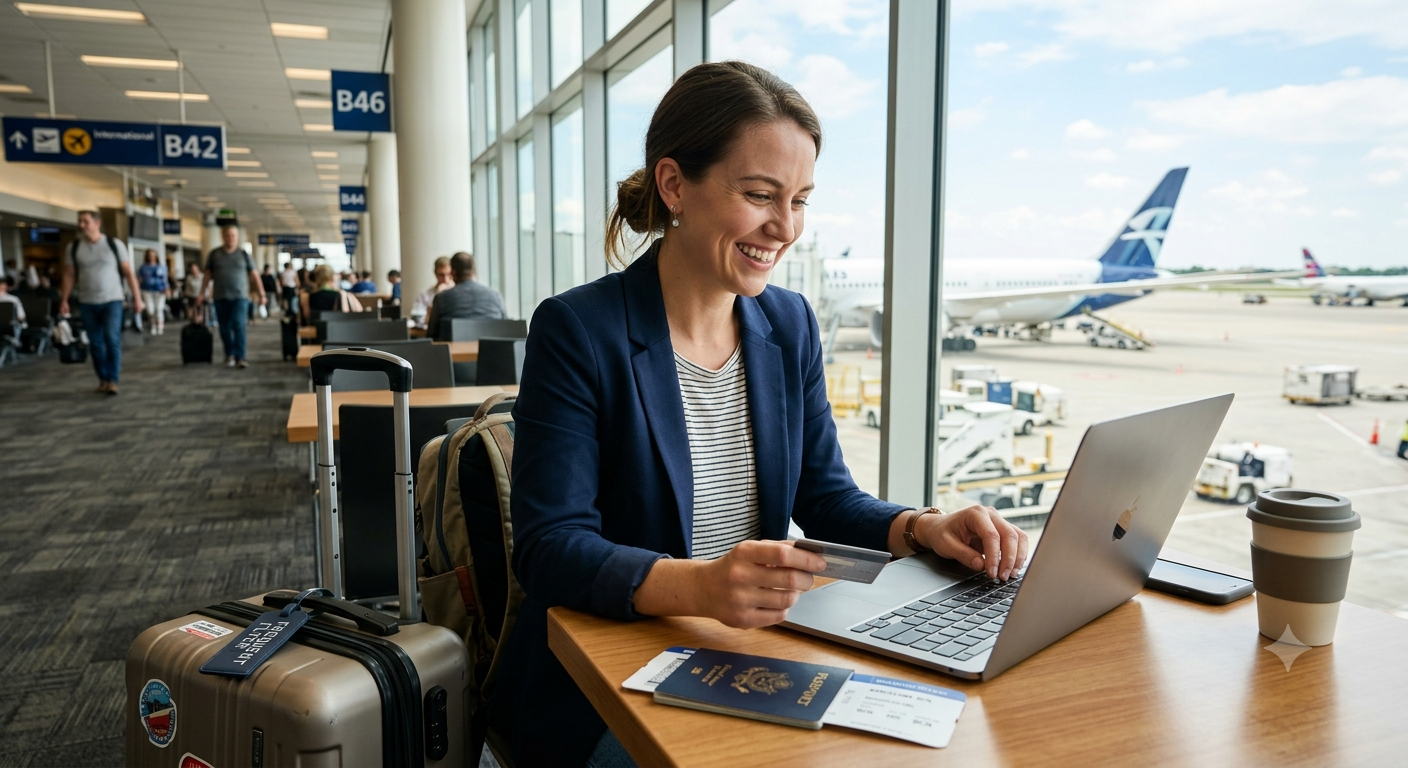
You’ve earned the miles. Now comes the harder part — actually getting good value out of them. If you’ve ever stared at an award booking screen wondering whether you’re getting a fair deal, you’re not alone. Knowing how to redeem airline miles effectively is a skill that takes time to learn, and most people never do. They either let miles expire unused, cash them out for gift cards at terrible rates, or book domestic economy flights that barely scratch the surface of what their miles are worth.
This guide covers every major way to redeem airline miles in 2026, ranks them by value, reveals the strategies frequent flyers use to get outsized returns, and explains the one redemption option most people overlook: converting your miles directly to cash.
The 7 Main Ways to Redeem Airline Miles
Not all airline miles redemptions are created equal. Here’s how the main options stack up, from highest to lowest value:
1. International Business or First Class Flights (Best Value)
This is where knowing how to redeem airline miles really pays off. Premium cabin award flights — particularly on international long-haul routes — consistently deliver the highest cents-per-mile value because the cash price of those seats is so much higher relative to the miles required.
Real-world examples in 2026:
- ANA First Class (New York to Tokyo): Book via Virgin Atlantic Flying Club for 120,000 points round-trip. The cash equivalent can exceed $20,000 — yielding 8–10+ cents per mile in value.
- Cathay Pacific Business Class (US to Asia): Book via Alaska Mileage Plan (now Atmos Rewards) for around 50,000 miles one-way. Cash equivalents regularly run $4,000–$6,000.
- Air France/KLM Business Class (US to Europe): Book via Flying Blue for roughly 60,000 miles one-way, with a stopover option that lets you add Paris to your itinerary at no extra cost.
- JAL Business Class (US to Japan): Book via American AAdvantage for 60,000 miles one-way — one of the most consistent sweet spots remaining in 2026.
The key insight: you’re not redeeming miles against a domestic $300 ticket. You’re applying them to a $6,000 business class seat. That’s where the real math works in your favor.
2. Sell Your Miles for Cash (Immediate, Guaranteed Value)
This is the option most people don’t know exists — and for many, it’s the most practical way to redeem airline miles in 2026. Rather than navigating award availability, dynamic pricing, transfer windows, and blackout dates, you simply sell your miles to a licensed mileage broker like MilesBuyer and receive cash via PayPal — often within minutes.
Why this ranks so high:
- No award availability required. The biggest frustration with flight redemptions is that the seats you want rarely open up when you need them. A cash sale has zero dependency on inventory.
- Guaranteed value, locked in today. Airline programs devalue constantly. Selling converts your balance into cash at today’s rate — before the next devaluation hits.
- Faster than any other redemption. From quote to PayPal payment, the entire MilesBuyer process typically takes under 15 minutes during business hours.
- Works for any balance size. Whether you have 40,000 miles from a sign-up bonus or 800,000+ accumulated over years of business travel, there’s a cash offer waiting.
- You get paid before you transfer. MilesBuyer pays your PayPal account in full before you transfer a single mile — no risk, no waiting.
For anyone who isn’t planning international premium cabin travel in the near term, selling miles for cash often delivers better real-world value than any other redemption method. Get a free quote from MilesBuyer to see exactly what your balance is worth today.
3. Partner Airline Award Flights (High Value)
Every major airline is part of an alliance — Star Alliance, Oneworld, or SkyTeam — and most programs let you book flights on partner airlines using your miles. This creates enormous flexibility and opens up redemption sweet spots that don’t exist if you only search within your own program.
- United MileagePlus covers 40+ Star Alliance and partner airlines including Lufthansa, Singapore Airlines, and ANA
- American AAdvantage has access to Oneworld partners including British Airways, Japan Airlines, Qatar Airways, and Cathay Pacific
- Delta SkyMiles operates within SkyTeam, with partners including Air France, KLM, Korean Air, and Virgin Atlantic
- Amex, Chase, Capital One, and Citi transferable points give you access to multiple alliances at once
One important note: some partner award bookings require calling the airline directly rather than booking online. China Southern, Etihad, and GOL partner awards on American, for instance, cannot be booked through AA’s website — you’ll need to call an agent.
4. Domestic Economy Flights (Moderate Value)
Redeeming airline miles for domestic economy flights is the most straightforward option, but it rarely delivers the best value. You need roughly 7,500 to 20,000 miles for a one-way domestic award seat depending on the distance, airline, and travel date. At an average mile value of 1.2–1.4 cents, a 15,000-mile domestic redemption equates to about $180–$210 in value — which is fine if your cash alternative was $400, but often not worth it if flights are running $150.
The rule of thumb: save your miles for redemptions where the cash price is high. Don’t burn 15,000 miles on a $149 domestic flight.
5. Flight Upgrades (Situationally Valuable)
Using miles to upgrade from economy to business class on a long-haul international flight can be excellent value — you’re converting a $500 economy ticket into a $3,000+ lie-flat seat experience for a modest number of miles. Most major carriers allow this, though upgrade award availability varies significantly. Delta, United, and American all allow miles-based upgrades, with American specifically enabling upgrades via miles on British Airways, Iberia, and Qantas flights as well.
The catch: upgrade award availability is often limited and tends to open up only close to the departure date, making it hard to plan around.
6. Hotel Stays, Car Rentals, and Experiences (Low-to-Moderate Value)
Most airline programs let you redeem miles for hotel stays, car rentals, and experiences — but these options rarely deliver the same value as flight redemptions. Airline miles are optimized for airline redemptions. Hotels have their own dedicated points currencies (Marriott Bonvoy, Hilton Honors, Hyatt) that almost always yield better per-point value than converting airline miles to hotel nights.
Use this option if:
- You have a small leftover balance that’s not enough for a flight
- You’re choosing between letting miles expire and booking a hotel stay
- A specific hotel redemption genuinely makes sense (rare but possible)
7. Gift Cards, Statement Credits, and Merchandise (Lowest Value — Avoid)
This is where most airline programs lose members real money. Gift card redemptions typically yield 0.5–1.0 cents per mile. Statement credits and “pay with miles” at checkout often deliver 0.6–0.7 cents per mile. Merchandise and shopping redemptions can go even lower.
On a 100,000-mile balance:
- Gift card redemption at 0.7¢ = $700
- Strategic business class transfer at 2.0¢ = $2,000+
The difference is $1,300 — from the same balance. This is why learning how to redeem airline miles strategically matters.
How to Redeem Airline Miles: A Step-by-Step Process
Regardless of which program you’re using, here’s the process for finding and booking award flights:
Step 1: Check your balance and miles value Log in to your frequent flyer account and note your exact balance. Use our sell miles page to see which programs MilesBuyer currently buys, or reference TPG’s monthly valuations to benchmark your program’s cents-per-mile value.
Step 2: Decide on a destination or goal Are you targeting a specific route? A dream destination? An upgrade? Knowing your goal shapes which program and which partner airline makes the most sense for your redemption.
Step 3: Search for award availability before transferring If you’re using transferable credit card points (Amex, Chase, Capital One, Citi), always confirm award seat availability before initiating a transfer. Transfers are typically irreversible. Check award availability directly on the airline’s website first.
Step 4: Compare programs for the same route The same flight can cost dramatically different amounts of miles depending on which program you use to book it. A business class seat to Europe might cost 60,000 miles through Flying Blue but 130,000 through Delta SkyMiles. Comparing programs before booking can save you tens of thousands of miles.
Step 5: Book early or watch for last-minute drops Airlines usually open their booking schedules about 11 to 12 months before the flight, and those willing to commit early will usually find award prices are thousands of miles lower. Closer to departure, airlines often drop award fares again if significant unsold award seats remain. Both ends of the booking window can offer value — it’s the middle (a few months out) that tends to be most expensive.
Step 6: Pay taxes and fees Award flights are never truly free. You’ll always be responsible for paying taxes and government-imposed fees at checkout, which can range from a few dollars on domestic flights to several hundred dollars on international premium cabin bookings — especially on programs that levy fuel surcharges like British Airways. Factor this into your value calculation.
Program-Specific Tips for Redeeming Airline Miles in 2026
Delta SkyMiles Delta uses fully dynamic pricing — there is no fixed award chart. Award costs vary significantly by date, route, and demand. Miles never expire, which is a genuine advantage. Best value: use SkyMiles for domestic routes with high cash prices, or for Delta One transatlantic business class via Virgin Atlantic Flying Club (which often prices the same Delta flight for fewer points than Delta’s own program).
United MileagePlus As of April 2, 2026, United switched to fully revenue-based earning. General members without a United credit card now earn zero miles on Basic Economy fares. Award redemptions use dynamic pricing. United does not impose fuel surcharges on award tickets, which is a meaningful advantage on international routes. Best value: Star Alliance partner redemptions — particularly Singapore Airlines, ANA, and Lufthansa business class.
American AAdvantage AAdvantage uses dynamic pricing but retains some fixed-rate sweet spots on partner airlines. As of December 17, 2025, AAdvantage members no longer earn miles on Basic Economy fares. Best value: JAL business class to Japan (60,000 miles one-way), Qatar Qsuites via Avios transfers, and Cathay Pacific business class via Alaska.
Alaska Mileage Plan / Atmos Rewards Consistently rated the highest-value U.S. airline loyalty program in 2026. Alaska Mileage Plan (now Atmos Rewards) at 1.55 cents per mile consistently offers the best value, especially for premium cabin awards on partner airlines. Unique in still offering distance-based earning and strong partner award options outside of its own alliance.
Amex Membership Rewards / Chase Ultimate Rewards / Capital One Miles Transferable credit card currencies give you the most flexibility when it comes to knowing how to redeem airline miles — because you can route points to whichever airline partner gives you the best deal for your specific trip. American Express has 17 airline transfer partners along with three hotel partners. Chase points can be transferred to 11 airlines and three hotels, all at a 1:1 ratio. Capital One allows transfers to 18 different airlines as well as four hotels.
Airline Miles Redemption Value: Quick Reference Table (2026)
| Program | Average Value (Flight Redemptions) |
|---|---|
| Atmos Rewards (Alaska) | 1.55¢ per mile |
| ANA Mileage Club | 1.5¢ per mile |
| Virgin Atlantic Flying Club | 1.5¢ per mile |
| American AAdvantage | 1.4¢ per mile |
| JetBlue TrueBlue | 1.4¢ per mile |
| United MileagePlus | 1.3¢ per mile |
| Air Canada Aeroplan | 1.3¢ per mile |
| Delta SkyMiles | 1.2¢ per mile |
| British Airways Avios | 1.2¢ per mile |
| Emirates Skywards | 1.0¢ per mile |
Source: Alessia Finance, March 2026. Averages reflect standard flight redemptions; strategic premium cabin transfers can yield 2–10¢+ per mile.
Frequently Asked Questions: How to Redeem Airline Miles
What is the best way to redeem airline miles? The best way to redeem airline miles in 2026 is for international business or first class flights, particularly through airline transfer partners with favorable award pricing. Strategic premium cabin redemptions routinely deliver 2–5 cents per mile in value — far exceeding the 1.2–1.5 cent average for domestic economy redemptions.
How many miles do I need for a free flight? You need approximately 7,500 to 20,000 miles for a one-way domestic economy flight, and 35,000 to 50,000+ miles for a one-way international economy flight. Business class international routes typically start at 40,000–60,000 miles one-way depending on the program and destination.
Can I redeem airline miles for cash? Airlines do not allow direct cash redemptions. You can redeem miles for statement credits with some programs at rates of 0.6–1.0 cents per mile. To receive actual cash, you can sell your miles to a licensed mileage broker like MilesBuyer and receive payment via PayPal, often within minutes.
Do airline miles expire? It depends on the program. Delta SkyMiles and JetBlue TrueBlue miles never expire. United MileagePlus miles don’t expire as long as your account has any qualifying activity. American AAdvantage miles expire after 18–24 months of account inactivity. Always check your specific program’s expiry rules — and if your miles are at risk of expiring, selling them is one way to capture their value before they’re forfeited.
What is the difference between airline miles and points? Functionally the same — both are loyalty currencies earned through flying, spending, or credit card purchases and redeemed for travel rewards. Some programs (like Delta and United) call them miles; others (like Southwest and JetBlue) call them points. Transferable credit card currencies like Amex Membership Rewards and Chase Ultimate Rewards are technically points that can be converted to airline miles.
Can I transfer airline miles to someone else? Most programs allow some form of miles transfer or pooling, though rules vary significantly. United MileagePlus allows transfers between members for a fee. Delta SkyMiles allows household account sharing. American AAdvantage allows transfers at a fee. Some programs restrict transfers entirely. Check your specific program’s rules before attempting to move miles.
When should I sell my miles instead of redeeming them? Selling makes the most sense when you can’t find award availability on routes you want, your balance is larger than you can realistically use for travel, you need cash rather than travel value, or your program has recently devalued or is at risk of doing so. Get a free quote from MilesBuyer to find out exactly what your balance is worth in cash today.
Ready to Turn Your Miles Into Cash Instead?
Sometimes the best redemption is the one that puts money directly in your pocket. If you have unused miles sitting in any of the 30+ programs MilesBuyer buys — whether it’s Delta, United, American, Amex, Chase, or dozens more — we’ll give you a free, no-obligation cash quote within minutes.
Fill out our free quote form → and find out exactly what your miles are worth in cash today. You’ll receive payment via PayPal before transferring a single mile. No risk, no waiting, no award calendar hunting.
You’ve earned those miles. Let us make sure you actually get their value.
Selling a specific program? MilesBuyer buys Delta SkyMiles, United miles, American Airlines miles, Amex points, Chase Ultimate Rewards, British Airways Avios, Emirates Skywards miles, and many more.